Induction Brazing Equipment
Join dissimilar or matched metals with fast, localized heat — clean joints, no distortion, and a process that's ready for automation from day one.
A filler that bonds without melting the parts
Brazing joins two pieces using heat and a filler material that melts at a temperature above the filler's own melting point but below the melting point of the parts being joined. Common fillers include phosphor copper, silver, copper, copper-zinc, and brass — the choice depends on the specific parts and the strength/conductivity the joint needs.
Induction heating applies that heat fast and only where the joint is, so the rest of the part stays unaffected — no distortion, and none of the unwanted metallurgical changes that can creep in from a slower, broader heat source. We support both vacuum and atmospheric brazing setups, joining parts of the same or different materials.
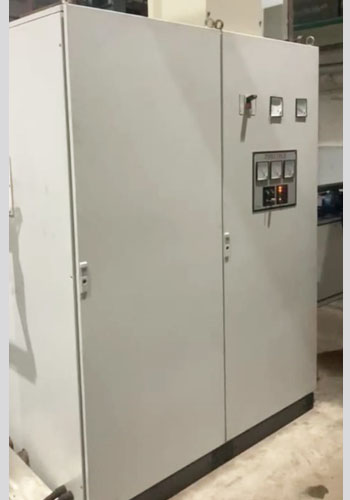
Consistent joints, without the guesswork
- Fast, localized heat directly at the joint
- Fully automatable, repeatable cycle
- Precise temperature control at the filler's melting point
- Vacuum or atmospheric brazing, your choice
- No distortion or unwanted metallurgical change elsewhere on the part
- Energy-efficient, cleaner than open-flame brazing
Common questions about this process
What filler metals work with induction brazing?
Common fillers include phosphor copper, silver, copper, copper-zinc, and brass. The choice depends on the base materials and the strength or conductivity the joint needs.
Can induction brazing join dissimilar metals?
Yes. The process joins parts of the same or different materials, since it's the filler — not the base metals — that needs to reach melting point.
Is induction brazing done in a vacuum or in open air?
Both are possible. Inductech systems support vacuum brazing for oxidation-sensitive joints and atmospheric brazing for higher-throughput, lower-cost runs.
Does induction brazing distort the parts being joined?
No — because heat is applied fast and only at the joint, the rest of the part stays close to room temperature, avoiding the warping and metallurgical changes that slower, broader heat sources can cause.
Joining dissimilar materials on a production line?
Tell us the parts, the filler alloy, and the volume — we'll spec the induction brazing cell.