Induction Shrink-Fitting Equipment
Assemble two parts with expansion and contraction instead of force — the gentlest way to fit components that can't take mechanical pressure.
Union by mechanical interference, without the mechanical force
Shrink-fitting is the union of two pieces by mechanical interference to form an integral assembly. The thermal route gets there by heating one part so it expands, fitting it in place, then letting it cool and contract to lock the interference fit — eliminating the need to force the pieces together under pressure.
That matters most on delicate parts, where mechanical pressure risks damage or deformation. The thermal method also reduces stresses and residual deformation in the finished assembly and gives tighter control over the quality of the union itself.
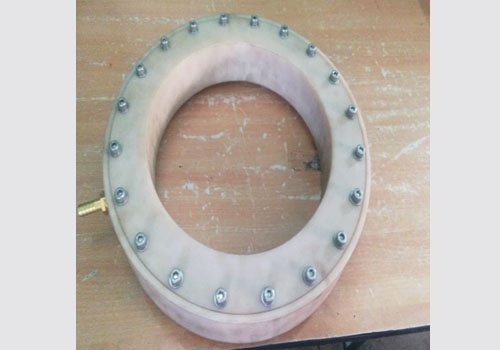
Built for parts that can't take a press
- No mechanical pressure applied to either part
- Reduces stress and residual deformation in the assembly
- Tighter, more controllable union quality
- Suited to precision and delicate mechanical assemblies
Common questions about this process
What is induction shrink-fitting used for?
It assembles two parts by mechanical interference — heating one part so it expands enough to fit in place, then letting it cool and contract to lock the fit, without pressing the parts together under force.
Why use heat instead of a hydraulic press for interference fits?
Mechanical pressure can damage or deform delicate parts. The thermal route achieves the same interference fit with no applied force and less residual stress in the finished assembly.
How tight a fit can induction shrink-fitting achieve?
The expansion/contraction method gives tighter control over the quality of the union than force-fitting, since the fit is set by controlled thermal movement rather than mechanical impact.
Assembling parts that can't take a press fit?
Send us the two components and the interference spec — we'll design the thermal cycle.