Induction Hardening Equipment
Localized, repeatable surface hardening — heat exactly where the part needs it, quench on your terms, and hold the tolerance your line demands.
Heat to 850–900°C, quench to lock in hardness
Induction hardening heats steel above its upper critical temperature — typically 850–900°C — then cools it rapidly using water or a water-polymer solution to increase surface hardness. It works on steels carrying roughly 0.3% to 0.7% carbon content, the range most structural and wear-critical components fall into.
Because the coil couples energy directly into the part, we can offer both static hardening (the whole zone heats at once) and progressive hardening via scanning, where the coil and quench travel along the part — useful for long shafts and bars where a single-shot coil isn't practical.
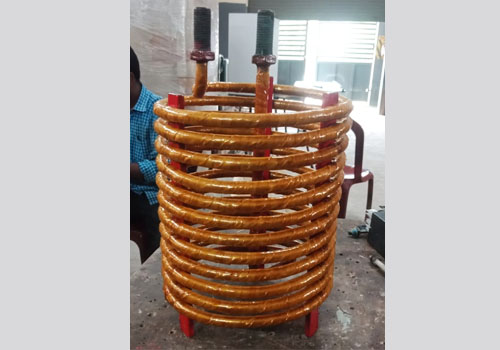
Built-in advantages over flame or furnace hardening
- Treats specific sections of a part without affecting the rest
- Frequency and heating duration adjustable per part geometry
- Non-contact heating — no flame, no direct tooling wear
- Cooling medium and rate regulated for consistent results
- Integrates into an existing production line, not just a standalone cell
- Static or progressive/scanning modes for different part lengths
Common questions about this process
What temperature does induction hardening use?
Induction hardening heats steel to 850–900°C, above its upper critical temperature, before rapid quenching in water or a water-polymer solution.
Which steel grades can be induction hardened?
Steels carrying roughly 0.3% to 0.7% carbon content respond well to induction hardening — the range that covers most structural and wear-critical components like shafts, gears, and pins.
What's the difference between static and progressive hardening?
Static hardening heats the whole target zone at once with a fixed coil. Progressive (scanning) hardening moves the coil and quench along the part, which suits long shafts and bars a single-shot coil can't cover.
How is induction hardening different from flame hardening?
Induction heating is non-contact and electronically controlled, giving tighter, more repeatable control over frequency, heating duration, and case depth than an open flame, with less risk of overheating or burning the surface.
Have a shaft, gear, or wear surface to harden?
Send us the material grade, geometry and hardness spec — we'll scope the coil and quench setup.